
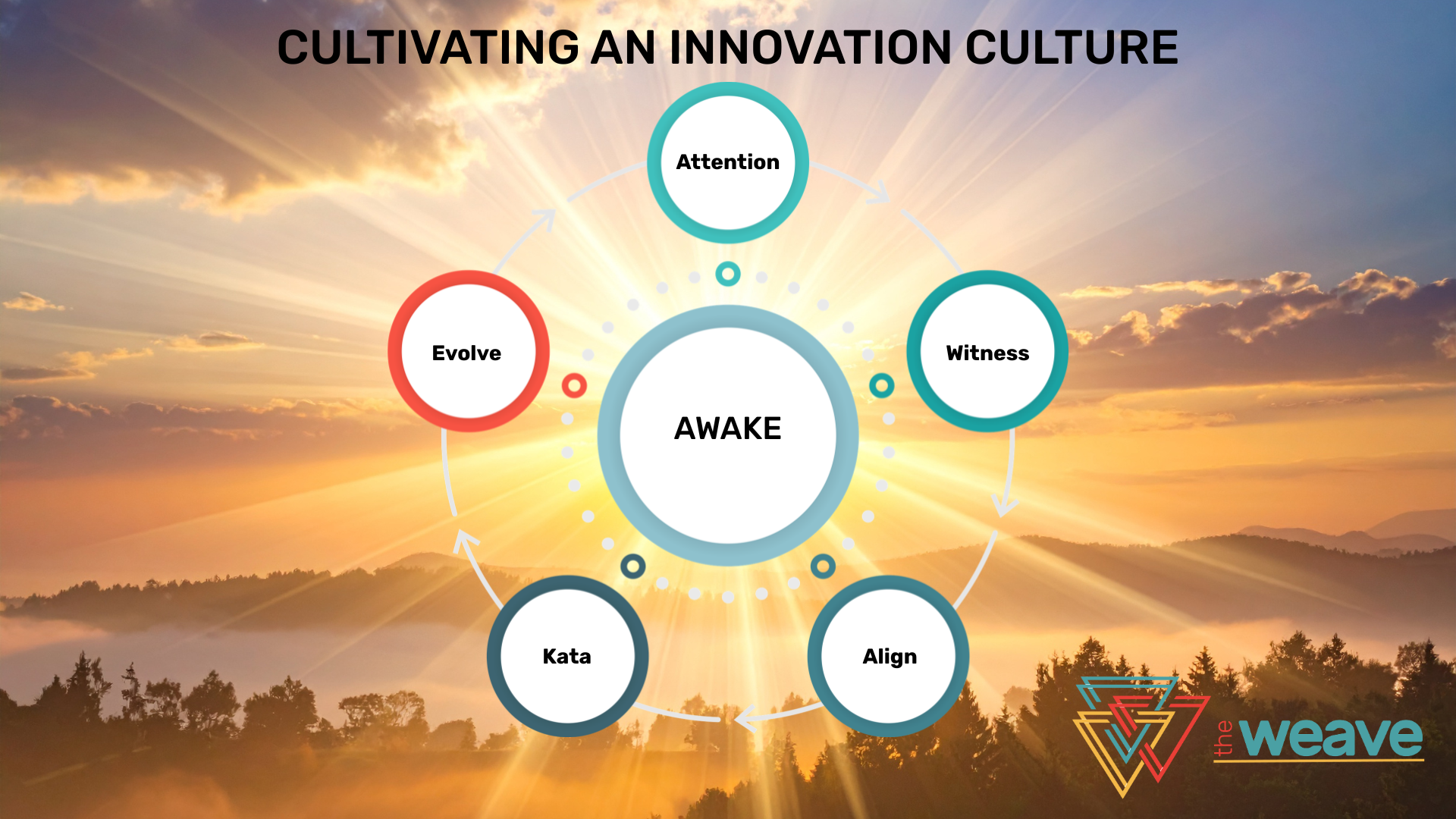
The AWAKE model bring innovation to life through a visual metaphor
I was asked to design a workshop focused on design thinking. Typically, I rely on a four-stage process: what is, what if, what wows, and what works. These four powerful questions are supported by a variety of resources and tools that assist in exploration. However, this time it felt slightly less dynamic than usual.
Design thinking, which I believe is directly linked to innovation, is often treated as a standalone activity in the startup world. I see innovation as a continuous process of acting to do things differently, whilst enhancing value. Many startups fail due to their resistance to change, the burden of sunk costs that are too painful to abandon, and the difficulty of admitting that the initial dream may need to be discarded.
Founders face tremendous pressure to move quickly, ship features, raise funds, and demonstrate traction. This constant push often undermines the habits needed to foster true innovation.
This is where our new model, AWAKE, comes in. It serves as both a simple visual metaphor, being AWAKE, and a practical mindset for cultivating strong, innovative cultures, especially when the path forward is unclear.
To illustrate this concept meaningfully, I found an interesting case study: the Dusty Camera concept. This digital roll allows classic 35mm cameras to capture 26.1 MP digital images without altering the beloved camera bodies. It succeeds because it respects established behaviours, retains cherished rituals, and alleviates significant pain points such as rising film costs, slow processing times, and shelves filled with unused cameras.
AWAKE is creating an innovative culture as a shared way to think and act
AWAKE stands for Attention, Witness, Align, Kata, and Evolve. More importantly, it is a loop, not a checklist. That matters because early answers are rarely the best ones, especially in startups where facts arrive late and opinions arrive early.
Most teams jump from problem to solution. AWAKE slows that jump without killing momentum. It creates enough space to see clearly, think properly, and act with intent. The first three stages help teams understand. Kata helps them improve ideas through practice. Evolve, takes the work into the market, then brings the learning back around again.
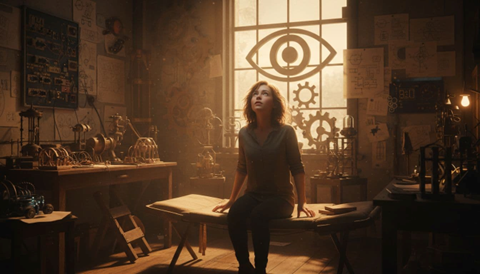
That moment of ‘Being AWAKE’ when ideas permeate
Over time, AWAKE becomes a shared language inside the business. People stop saying vague things like "we need more ideas". Instead, they ask whether they're paying attention, whether they've really seen the user, or whether the team has aligned on the real problem. That shift improves judgment. It also improves action.
An innovative culture is rarely built by one big workshop. It grows from the questions a team repeats every week.
That's why the idea sits well alongside approaches such as strategic slowness to spark innovation. Founders and investors both need a repeatable way of working, not random flashes of brilliance.
Attention helps teams notice what others miss
Attention is the discipline of stepping out of autopilot. It means separating facts from assumptions and asking what is really happening, not what you hope is happening.
Weak innovation often starts with incomplete seeing, not poor effort. A team can work flat out and still solve the wrong thing if it misses the truth at the start.
In the Dusty Camera case, Attention would have picked up a few simple signals. People still love the feel of old mechanical cameras. Looking through a proper viewfinder feels slower and more personal than tapping a phone. At the same time, film and processing now cost far more, and lab turnaround can be painfully slow. Meanwhile, many beautiful old cameras sit in drawers, unused, even though their lenses and mechanics still work well.
That's not a technology story first. It's an observation story. Someone noticed a gap between what people value and what now gets in the way.
Witness keeps the human experience at the centre
Witness takes Attention deeper. It moves from "what is happening?" to "what is it like for the person living with this?"
That change matters. Teams often watch user behaviour, but they stop short of understanding the feeling underneath it. Witness asks what people say, what they do, what they fear, and how they already cope.
For the Dusty Camera user, the emotional picture is clear. They want the joy of manual controls, a bright viewfinder, and a slower rhythm. They like committing to a frame. Yet they don't like paying heavily for every roll, waiting for scans, or discovering too late that exposure went wrong. They want the ritual, but not the friction.
This is why the strongest ideas protect what people value while removing what hurts. Innovation is rarely about technology alone. In most markets, it lives in the quality of human experience.
The Dusty Camera shows how better design thinking can protect culture and create value
The Dusty Camera concept works because it does not force an old camera to behave like a new gadget. Instead, it places a digital core inside an analogue experience.
The basic idea is simple. A digital roll sits where a normal film cartridge would go. An APS-C sensor sits at the film gate. A small remote helps sync the sensor with the mechanical shutter. There's no large rear screen asking you to stop and review every frame. You shoot first, then transfer images wirelessly later. It captures RAW and JPEG files, offers ISO settings from 100 to 6400, and fits a wide range of 35mm camera bodies, though some may need small physical adjustments.
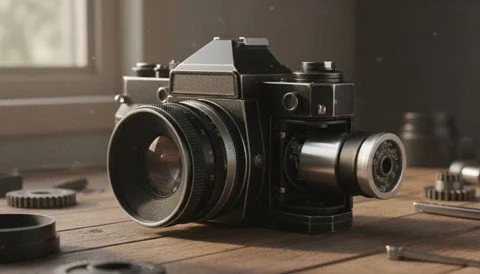
The Dusty Camera - Reimagined
That is respectful design thinking. It updates the function without deleting the object's behaviour, emotion, or identity. In business terms, it turns neglected assets back into useful ones. In cultural terms, it says, "keep what matters, change what blocks it".
Good product design does not always replace old habits. Often, it protects the right ones.
Align turns loose insight into a problem worth solving
A team using AWAKE would not frame the challenge as "How do we make film cameras digital?" That sounds clever, but it is too broad and too technical.
A better frame is this: how might we help people use beloved classic cameras again without stripping away the experience that makes them special?
That shift is where Align earns its keep. It turns interesting observations into a problem worth solving. It also saves teams from building shiny answers to the wrong question.
For founders, this is the point where sharper commercial thinking comes in. Who cares enough to adopt this? Why does this matter now? What would success look like: a passionate niche, steady repeat demand, or wider collector appeal? Investors care about the same things. Clear alignment reduces waste. It also makes the story easier to back because the customer's need is easier to recognise.
Kata is where raw ideas become better ideas
Kata is a Japanese word typically associated with prearranged, choreographed patterns of movement in martial arts. We have repurposed it to embrace a philosophy around choreographed practice. It is not about repeating work mindlessly. It is about improving your feel for what makes an idea stronger over time.
Think of making tea. At first, you follow the steps. Later, you know by feel when the balance is right. Teams build product judgment in much the same way.
With the Dusty Camera, Kata would involve trade-offs. Keep the body visually unchanged, or add obvious new hardware? Add a big screen, or protect the more deliberate shooting rhythm? Accept a small remote that feels odd at first, or compromise the whole concept by over-modernising it? Work through broad compatibility, even if some camera bodies need tweaks?

It brings teams together to ask the right questions.
This is where innovation culture is either built or lost. Bad teams fall in love with the first idea. Nervy teams kill ideas too early. Better teams work the idea, stretch it, test the tension, and only then decide what deserves to move forward.
Evolve is how founders turn creative thinking into real progress
Creative thinking only matters when it meets the market. Evolve is the stage where ideas get tested, experienced, reshaped, and either strengthened or dropped.
For founders, that means moving from workshop energy to commercial evidence. For investors, it means looking for learning speed, not only pitch polish. The Dusty Camera concept is a good example because some design choices will split opinion. The two-step shooting process will not suit everyone. No instant image review will feel limiting to some people. Yet those same limits may make the product more attractive to users who want a slower, more committed style of shooting.
A simple 30, 60, and 90-day view helps:
In the first 30 days, test what people are willing to try and what they expect from the experience.
In 60 days, build around the parts that gain traction and remove what creates unnecessary friction.
At 90 days, back what is working and make it more real in the market.
Not everything will work. Still, everything should teach.
What founders can learn from the Dusty Camera launch.
The bigger lesson is not about cameras. It is about how value often appears.
Good innovation often revives existing assets rather than replaces them. Constraints can sharpen a proposition rather than weaken it. A strong product story respects identity and ritual, not only performance specs.
That is why the Dusty Camera idea has pull. It brings old cameras back into use rather than treating them as obsolete objects. It keeps the feel people care about while removing a major barrier. That is a strong pattern for startups in many sectors.
There is an investor lesson here, too. Thoughtful demand often first appears in passionate niches. If a product solves a real pain while protecting something people already love, early traction can be more meaningful than broad but shallow interest. Product-market fit often starts with a group that says, "Finally, this understands why I care."
How to build AWAKE into everyday team habits
Culture is not built by posters on a wall. It comes from repeated ways of noticing, thinking, and acting.
That means turning AWAKE into everyday prompts. In team meetings, founders can ask:
What are we seeing, and what are we only assuming?
What are users really experiencing, not merely saying?
What problem are we truly solving?
How has this idea improved since last week?
What will we test next?
When those questions become normal, conversations improve. Decisions get sharper. Teams adapt faster because they are less trapped by their first view of the problem.
Founders also need enough headspace to keep those habits alive. Tired teams react more and notice less. That is why support that helps boost productivity for founders matters more than it might seem. Habits shape judgment, and judgment shapes culture.
Staying AWAKE is a better bet than chasing one brilliant idea.
Breakthrough moments matter, but they rarely carry a company on their own. What lasts is a way of working that helps people notice more, think more clearly, act more deliberately, and adapt more quickly.
The Dusty Camera case shows the wider lesson. The best ideas often come from staying with the problem longer than others and respecting what users already value. As companies grow, they do not rise on ideas alone. They fall back on daily habits, and AWAKE gives those habits a useful shape.
AWAKE is a model designed by The Weave to help founders build an innovative culture into their startups. It start by asking one simple question:
Are we AWAKE?
