
Community Through Snyder's Lens
“And yet when you look at a society that sings and dances, it’s not that it has an effect on their life – it is their life.”
I have been thinking a lot about community of late, not least because you need to know your place in one, and also, what passes as community can also come across as a network. A community is only a community if it has purpose and is composed of those who associate with it. The Weave has always striven to be a community developer, yet so few people associate themselves with us. Gary Snyder wrote about community in a way that still feels fresh. He didn't see it as a club, an audience, or a layer you add after the real work. He saw community as a living web of people who occupy a place, share the same weather, lean into work, craft memories, and care.
We believe that matters to founders because many businesses chase attention and wonder why it doesn't translate into loyalty. In a crowded online world, people don't stay for noise. They stay where life feels shared.
Snyder's lens helps you build that kind of place where celebration, story, work, and support belong together.
What Snyder means when he says community is life, not an add-on
Snyder, a poet and ecological thinker, treated community as part of ordinary life. Food, song, grief, neighbourly help, local work, and seasonal gatherings all belong in the same picture. He wasn't talking about "engagement" in the modern sense. He was talking about people living in ways that hold each other and the land around them in view.
That idea runs counter to a common modern habit. We split life into boxes. Work sits in one box. Leisure goes in another. Belonging gets pushed into events, content, or the occasional meetup. Snyder's view is much simpler. Shared life is not something extra. It is the thing itself.
He also widened the circle. Family matters, of course, but he pushed beyond private life into public life. If you care about a place, you turn up for it. You learn its needs. You help with the boring bits as well as the lovely bits. That might mean a local clean-up, a school fundraiser, a parish hall meeting, or a small act of care no one posts about online.
On Sunday, my grandson and I sat in the baking sun, along with a few 100 Colchester residents, to watch the Essex women win a T20 game. It was a wonderful afternoon, but what made it special were three things:
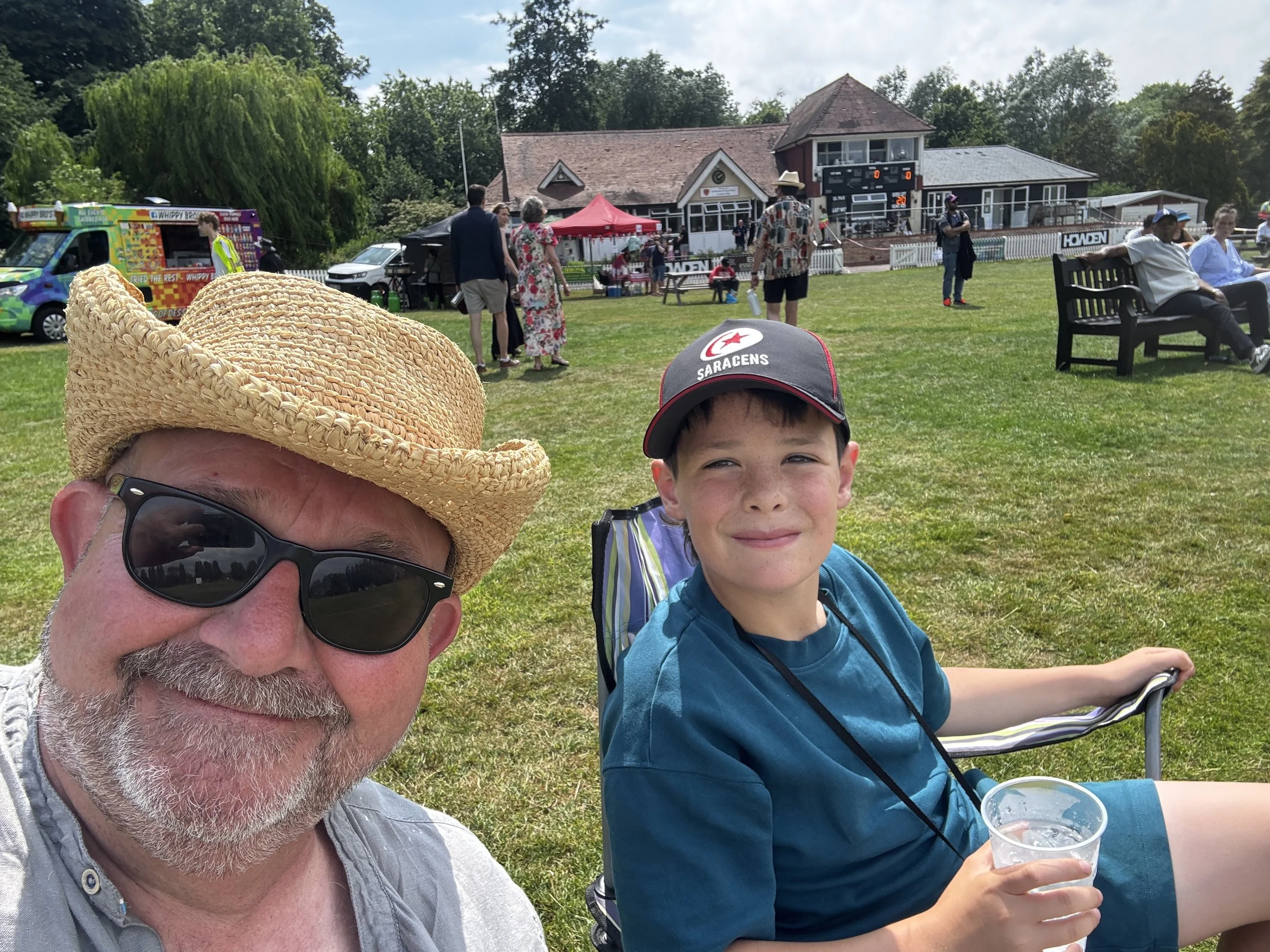
Don’t focus on the idiot in the hat; he’s my grandson!
1. This was Colchester Cricket Club hosting a first-class game of cricket. The last time was pre-pandemic.
2. It was the first time my grandson had been to a quality cricket match.
3. The third reason is that we were there to support the Club and the city, which says we are here; it’s a great venue; come and support us.
Shared celebration is not decoration. It is one way a group remembers who it is.
For founders, this changes the frame. A community isn't a mailing list with comments. It is a set of repeated human experiences that build trust and a sense of responsibility over time.
Why singing, dancing, and ritual matter more than we think
Snyder gave real weight to celebration. Singing, dancing, meals, ritual, and shared marking of time were not background noise to him. They helped people remember stories, honour loss, greet change, and celebrate together.
That matters because groups need rhythm. Without it, people drift into loose contact and shallow exchange. With it, they start to feel a pattern. They know when the group gathers, what gets noticed, how wins are shared, and how hard weeks are held.
Ritual doesn't need to be grand. A welcome round at the start of a session can be enough. So can a monthly "what changed this month?" check-in. A small celebration after someone lands a client, hires a first team member, or decides to rest for a week can matter more than a polished webinar.
Over time, those moments build identity. People stop asking, "What do I get here?" and start feeling, "These are my people."
How a place-based community creates deeper roots
Snyder tied community to place. In his view, people connect more honestly when they know the ground under their feet, the weather, the shared routes, and the needs of the place around them. He even stretched the idea of community beyond humans, towards rivers, soil, creatures, and the wider local ecology.
That can sound distant from business, but it isn't. Place keeps people real. When a group knows where it lives, even loosely, it becomes less abstract. Members notice local pressures, local stories, and local limits. They don't float above life.
For founders, place can mean more than postcode. It can mean the town where you meet, the region you support, the studio you hire, the cafe you return to, or the local issue you choose to back. Even online communities need grounding. A yearly in-person day, a shared local project, or a focus on the realities of a specific stage of business can create that anchor.
People grow roots when they care for something together. That is why place matters.
What founders can learn from Snyder's lens on community building
Founders often build community as if it's a content problem. Post more. Schedule more. Add another platform. Snyder's lens points somewhere else. Community grows through shared life, repeated participation, and a reason to care together.
This also fits what strong organisations learn over time. A clear purpose creates better ideas and stronger trust than vague culture talk on its own. Open channels matter. So do low barriers to contribution. When people feel welcome to add, ask, or shape something, the group gets smarter and warmer at the same time.
The wider lesson is simple. Treat the community more like an ecosystem and less like a broadcast channel. People should add value to each other, not only consume what the founder puts out.
Build rituals people can return to
Ritual gives a community a heartbeat. It tells people, "You can come back here, and something familiar will meet you."
For a small brand, that could be a weekly prompt in a private group. It could be a Monday co-working hour, a monthly hot seat, a first Friday lunch or a short voice note where members share one win and one sticking point. The ritual matters more than the format. Repetition builds trust because people know the group will still be there next week.
That is close to how The Weave's founder community is being built. The point isn't endless activity. The point is steady contact, support, and a space where people can return without having to perform.
Ritual also lowers pressure on the founder. You don't need to invent magic every week. You need a few reliable shapes that hold people well. Familiarity, used well, makes a group feel safe enough to be honest.
Make participation feel natural, not forced
Many founder communities become stages. A few people post polished updates. Most people watch from the edges. That pattern looks active, but it rarely builds belonging.
A better approach is softer and more open. Give people small ways to join in. Ask for a lesson from the week. Invite one useful introduction. Let members share a wobble without turning it into a performance. Keep the tone warm and practical.
This is where Snyder's thinking meets good community design. A healthy group doesn't depend on one central voice. It leaves room for many voices, many kinds of skill, and many levels of confidence. A bookkeeper, a brand designer, a florist, and a coach will all see the same problem differently. When those views mix, better ideas appear.
That is also the promise behind this founder-first ecosystem. People want more than surface-level networking. They want support that feels human, useful, and easy to step into.
Natural participation starts with a welcome. It grows through clarity. Then it stays because people feel useful rather than managed.
Treat stories and humour as part of the glue
Stories hold a group together because people remember lived moments better than polished messages. One honest account of a failed launch can help more than ten tidy tips. A shared laugh after a chaotic week can do more for trust than another slide deck. Accepting your request for 20 minutes of our time, just to hear your concerns, maybe make an introduction or think through a problem.
Snyder understood that culture grows through what people do together and retell together. The stories a group repeats become its memory. They show what counts, what gets forgiven, what gets celebrated, and how people survive rough patches.
For founders, this matters more than it first appears. Humour lowers status walls. It tells members they don't need perfect language or a perfect business to belong. Stories do the same. They turn abstract advice into something human and usable.
They also move knowledge fast. One person's mistake can save ten others a month of stress. One member's unusual fix can spark an idea in a different trade. That sort of cross-pollination often creates the best learning because it cuts across silos and stale habits.
If your community only shares information, it will feel thin. If it shares stories, laughter, and small truths, people will keep coming back.
Why this matters for modern business and wellbeing
This way of seeing community isn't soft or sentimental. It is practical. People with strong social ties tend to do better over time, both in life and at work. The long-running Harvard Study of Adult Development has linked close relationships with better health and a happier life. Shared effort also matters. Psychologist Mihaly Csikszentmihalyi wrote about flow, those absorbed moments when people are fully in what they are doing. Communities can create that through conversation, work, and mutual help.
For business owners, the case is just as clear. When purpose, trust, and participation line up, loyalty grows. People stay longer. They refer others. They forgive the occasional wobble because the relationship has depth.
The hidden cost of separating work from life
Modern life makes separation look normal. Work happens in one app. Friendship lives somewhere else. Learning sits in a course. Care becomes a private problem. The result is a strange kind of distance. People can stay busy all week and still feel alone.
Business communities often copy that split. They offer knowledge without warmth, visibility without support, and networking without friendship. Members may join, lurk, and leave. Founders end up feeding a machine that never feels alive.
Snyder offers a better balance. He reminds us that work, care, play, grief, and celebration all belong to one life. When a community honours that, people relax a little. They don't have to leave part of themselves at the door.
That shift supports well-being by reducing strain. It also helps businesses because people trust spaces where they can be more whole.
How shared meaning supports trust and loyalty
A community lasts when people share more than information. They need repeated contact, a sense of purpose, and some proof that they matter to each other. That is how trust forms. It rarely comes from a clever slogan.
Businesses that understand this often build stronger loyalty. People don't only buy the offer. They join the pattern around it. They come for the workshop, then stay for the conversations, the introductions, the humour, and the feeling that someone will notice if they go quiet.
There is a wider lesson here for founders. Don't confuse control with strength. A real community needs some give. Members should shape the space through their questions, stories, and acts of care. That shared meaning creates a sturdier kind of growth because the group is not held together by attention alone.
The strongest communities feel useful and alive. They help people do better work and feel less alone whilst doing it.
Conclusion
Seen through Snyder's lens, community is not a side project around business or culture. It is the life inside both. The singing, the check-ins, the shared meals, the local care, the laughter, and the work all belong to the same fabric.
For The Weave, that means the gatherings, stories, introductions, humour, and learning moments are not supporting content. They are the community itself.
Founders do not need to manufacture a sense of belonging. They need to create the conditions where people can return, contribute, care, and be known.
The Weave has the founder’s back, so they can have their teams' backs.
Founder first; business second, because without the former, the latter stands no chance.
If this chimes with you - if you believe in a founder-first mindset, then check out our offer, follow us, and join us on this crusade - https://qrco.de/beK7XD
Our Promise
1. The Founder comes first because when founders feel supported, they can lead with more clarity and give their teams stronger backing.
2. The Weave is built for a founder-first mindset, so founders can focus on the business while their people feel the benefit every day.
3. A supported Founder makes a stronger company, and that starts with trust, care, and practical help for the people at the top.
4. If this speaks to you, check out our offer at https://qrco.de/beK7XD, follow us, and join a community that puts founders first.
