The Human Element in AI Still Matters (Even When the Output Looks Perfect)
I keep switching between amazement and a low-level unease as AI gets better. One moment I'm watching it tidy my messy notes into a neat summary. Next, I'm wondering what happens when "good enough" turns into "better than most".
I use AI in my day-to-day work. It helps with emails, spelling, and quick report edits. It also gives me creative support, like idea prompts and rough outlines, or a sense-check on trends. Yet I don't want it to replace the part of making that gives the work meaning. That's the bit that teaches me taste, patience, and judgement.
Here's the tension I can't ignore. Audiences often don't care how something was made, they care if it works. Creators care deeply, because the process shapes the person behind the work. Trust sits in the middle. If my audience can't tell what's real, they'll stop believing any of it. That's why AI Human Creativity still needs a human at the centre, not just a human clicking "approve".
AI can boost my work, but it cannot replace why I create
AI is brilliant at support. It's less brilliant at meaning.
When I use it well, it acts like a helpful assistant who never gets tired. It takes the boring parts off my plate, so I can focus on the bits that need judgement. When I use it badly, it turns me into a manager of outputs instead of an actual maker.
Speed is tempting, especially if you run a business or publish content often. However, speed isn't the same as satisfaction. A fast draft doesn't teach me anything. A finished piece doesn't always feel like mine, even if my name is on it.
Authorship isn't just typing words or placing images. It's deciding what matters, what's true, what's fair, and what the work stands for. That's where my voice lives. If I hand over those choices, I might still get content, but I lose the part that builds skill.
I think of it like cooking. A ready meal can fill you up. Still, it won't teach you how flavour works. It also won't become "your dish" in the same way. AI can help me prep ingredients, but I still want to do the cooking.
Where AI genuinely helps me (and saves my energy for better work)

Most of my best uses of AI are ordinary, not flashy. They're the tasks that drain attention without adding much value.
Here are the moments it earns its place in my workflow:
- Drafting dull emails: I give bullet points, it turns them into a polite message, then I rewrite the tone.
- Tidying grammar: As someone with dyslexia, Ai catches errors and clunky phrasing, especially when I'm tired.
- Summarising notes: After calls or interviews, it helps me pull out themes and action points.
- Brainstorming angles: It throws up options when I'm stuck, then I choose the one that fits my audience.
- Checking patterns in feedback: I paste comments and reviews, then look for repeated needs or areas to work on.
- Creating first-pass outlines: It suggests structure, but I change the order and emphasis.
The key part is what happens after the assist. I still decide what's relevant. I still cut the bland bits. I still publish only what I'd stand behind in public.
The line I try not to cross, from creator to commissioner
There's a subtle shift that happens when I only prompt and approve. I stop learning.
An easy comparison is DJing (a personal hobbie of mine). You can auto-mix a set with clever software. It might even sound cleaner. Yet the DJ who learns to read a room, recover from a mistake, and take a risk builds a craft. That craft shows up in small choices, like when to drop the energy, or when to let a track breathe. AI can make a mix perfectly but the joy I get when I get a mix just how I want and I can't stop thinking about it is priceless. I wouldn't get that joy of discovery with a text box.
Podcasting has the same trap. AI can write a script, clean the audio, even fake a voice. The show might sound "professional". Still, if I didn't do the thinking, I'm not growing. I'm commissioning work, not creating it.
Commissioning is valid. Businesses do it all the time. The problem starts when I pretend it's the same as making. If I'm honest about which one I'm doing, I can keep my standards, and my audience can keep their trust.
If I can't explain why a choice is there, it's probably not my work yet.
What audiences want versus what creators need are not always the same
People consume a lot of content in a tired, hungry way. They want something that looks good, sounds good, or solves a problem quickly. In that mood, the process can feel irrelevant. If the result entertains, who cares how it was made?
I get that. I'm not immune to it either.
However, the process starts to matter when trust and connection matter. That includes education, health, finance, journalism, and personal brands. It also includes anything built on identity, like a founder-led business or an artist's work. In those spaces, the "how" affects the "what".
If a piece of work is meant to represent me, the process shapes its integrity. When I spend time with an idea, I notice my own blind spots. When I rewrite a paragraph, I find the real point. Those steps change the work, even if the reader never sees them.
Also, the process carries signals. It signals effort, care, and accountability. Those signals become part of the value, especially when AI content floods feeds and inboxes.
If the end result is good, does anyone care how it was made?
Most people don't want to watch the sausage being made. They want their dinner. That's fair.
A blockbuster film has thousands of people behind it. An AI-generated video might come from one person and a laptop. If both entertain you, you might not care. In some categories, that "result only" mindset will win.
I see it clearly in:
- background music for shops or short clips
- quick ads with no long-term brand risk
- internal materials like training summaries and meeting notes
In those cases, AI can be a sensible choice. The audience isn't looking for intimacy or truth. They're looking for function.
Still, even there, I'd be careful about pretending the work is hand-made when it isn't. The content might be fine, but the lie is what corrodes trust.
Why I think the story behind the work still changes its value
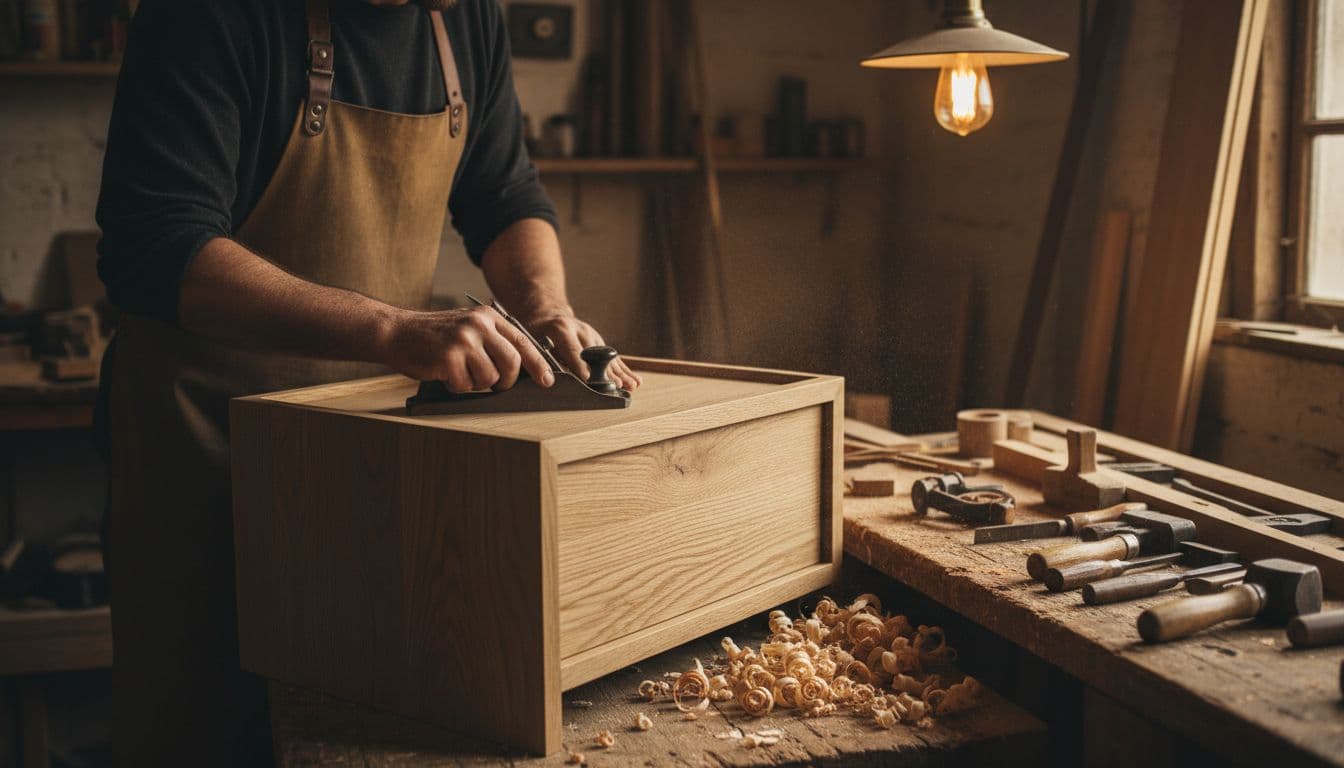
Imagine two bedside tables that look almost the same. One comes flat-packed from a warehouse. The other comes from a local carpenter who shaped, sanded, and finished it by hand. The wood feels warmer. The edges have tiny imperfections. You can picture the workshop.
You're not just buying a table. You're buying provenance, care, and the ability to look someone in the eye if something goes wrong.
That's how I think about creative work and brand work. People don't only pay for pixels, sound waves, or neat sentences. They pay for trust. They pay for taste. They pay for the fact that someone made choices and will stand by them.
For business owners, this matters more than ever. When your content is part of your reputation, the story behind it shapes how people feel about you. Customers remember when you show up with care. They also remember when you cut corners and try to pass it off as craft.
The real risks are trust, jobs, and a growing taste for fake
AI isn't "good" or "bad" on its own. It's a tool, and tools amplify incentives. Right now, the strongest incentives are speed, scale, and cost reduction. That's where the risks start.
The biggest danger I see isn't that AI will write a mediocre blog post. It's that it will make deception cheap, and make human labour feel optional.
At the same time, I don't want panic. AI can help small teams compete with big budgets. It can open doors for people who struggle with writing or language. It can also support accessibility, which I care about. The point is balance, and clear boundaries.
If we ignore the risks, we'll pay for it in ways that don't show up on a spreadsheet.
When AI makes deception cheap, everyone pays the cost
A realistic video used to be hard to fake. A convincing voice clone used to take serious effort. Now the barrier is dropping.
That changes the day-to-day reality for creators and business owners. A fake clip can damage a reputation before you even see it. A spoof audio message can trick staff into sending money. A fabricated "quote" can spread fast because it fits a narrative.
As a result, proof becomes part of the job. Transparency stops being a nice extra and becomes a shield. Clear sourcing, behind-the-scenes context, and honest disclosures help people know what they're looking at.
It's frustrating, because we didn't ask for this extra work. Still, ignoring it won't make it go away.
The business incentive is not always creative, it is often financial
I watched an AI-generated film recently that was technically impressive. The lighting looked cinematic. The camera moves felt confident. Yet I knew it was AI-generated, I couldn't stop examining it from a technical perspective. I was analysing it, rather than enjoying it. It pulled me out of the story.
That reaction surprised me. I'm not anti-tech. I just realised that part of what I enjoy is sensing human intention behind the frame.
The bigger point is why some projects use AI at all. Often, it's cheaper. It reduces headcount. It shortens timelines. Those are business reasons, not creative ones.
To be fair, AI can also enable small teams. A solo founder can make a passable ad without hiring a full studio. That's a real benefit. Still, when whole crafts vanish, we lose more than jobs. We lose mentors, apprenticeships, and the slow build of standards.
When cost becomes the only goal, quality turns into a coincidence.
How I use AI without losing my voice, values, or credibility
I don't think "no AI" is the answer for most people. I think "humans in charge" is.
For me, that means I treat AI like a tool for rough work. I ask it for options, then I choose. I let it speed up admin tasks, then I use the saved time for taste and truth. Most importantly, I keep accountability with me.
If you're a creator, your voice is your edge. If you're a business owner, credibility is your edge. Both get weaker when you hide behind automation.
A good rule of thumb is simple: if the work could harm someone if it's wrong, don't let AI be the final say.
My simple rules for keeping humans in charge
I keep a short set of rules that stop me drifting into lazy habits:
- I set the goal and the audience first: If I can't state those, I'm not ready to write.
- I add real experience and opinions: AI can't live my life, meet the people I meet, or learn from my mistakes.
- I fact-check anything that looks like a claim: If I can't verify it, I remove it.
- I edit for tone and clarity: I use text-to-speech to read it out loud, because my ear catches what my eyes miss.
- I never fake personal stories: If it didn't happen, it doesn't go in.
- I disclose heavy AI use when it matters: Especially in professional work or anything trust-based.
- I don't use AI to impersonate others: No voices, no faces, no "as if" quotes.
- I keep a record of sources and drafts: It helps if I need to explain decisions later.
These rules aren't about purity. They're about being able to stand behind the work with a straight face.
A future where human-made becomes a badge of honour

I don't think human-made work will disappear. I think it will become more visible, and more valued, because it's rarer.
Vinyl still exists because people like the ritual and the warmth. Cinema still matters because a big room and shared attention feel special. Live theatre carries status because you're watching something that could go wrong in real time.
The same pattern will show up in creative work and brand building. "Human-made" will signal care. It will also signal accountability, because there's a person who can answer for it.
For creators, that's hopeful. You don't have to beat AI at speed. You can win on judgement, honesty, and a point of view. For business owners, it's a useful north star. You can use AI for support, while keeping your customer-facing work grounded in real expertise.
Conclusion
I'm happy to use tools that save time on repetitive tasks. Still, I don't want those tools to replace the parts of making that build skill and joy. The human element is where taste forms, and where trust is earned.
My aim is simple: choose your line, be honest about your process, and protect your audience's confidence. If you're unsure where to start, keep the human in charge of decisions, facts, and voice. Use AI with intention, and champion human work where it matters.