
Shoulder Pain at Work: When Poor Posture, Long Hours and Stress Collide
Late in the day, many founders end up in the same pose. You're bent over a laptop, chin jutting forward, shoulders creeping towards your ears, eyes locked on the next problem. The body starts to mirror the business: tense, braced, carrying too much at once.
That link matters. Pain in the shoulders often accompanies neck pain, headaches, and upper back tightness. In many cases, it grows from ordinary habits, long desk hours, repeated mouse use, poor posture and stress that never quite switches off. The reassuring part is this: common work-related shoulder pain often improves when you make small, steady changes and stick with them.
Why does shoulder pain build up when work gets intense
Shoulder pain rarely appears out of nowhere. More often, it builds quietly while your attention is elsewhere. Long hours of sitting reduce movement. Hunching forward asks the neck and upper back to hold the head in a harder position. Reaching for a mouse, staring at a screen and clenching under pressure all add load.
Think of your shoulders as a set of guy ropes holding up a mast. They work well with balanced tension. Keep pulling one side all day, and the whole structure starts to complain.
Frozen shoulder is different. It tends to bring marked stiffness and a clear loss of movement. Still, poor posture and low activity can make many shoulder problems feel worse, because the joint and surrounding muscles get less healthy movement.
The posture habits that quietly strain your neck and shoulders
Rounded shoulders are common at a desk. So is forward head posture, where the chin drifts out as if you are trying to meet the screen halfway. Add raised shoulders, and the muscles around the neck never really get a break.

Poor posture at work
Some habits are less obvious. Using a mouse with one arm stretched across the body can overload one side. Cradling the phone between shoulder and ear is another classic trigger. Sitting without back support also leaves the upper body doing extra work for hours.
None of these positions is harmful for a minute or two. The issue is time. When one posture becomes your default, muscles stay switched on too long, joints move less, and soreness starts to spread from the shoulder into the neck and upper back.
How stress and tense deadlines make pain feel worse
Stress changes the body before you notice it. The jaw tightens. Breathing gets shallow. Shoulders lift. You type harder. Then you sleep badly, and the cycle repeats the next day.
For leaders under pressure, this is common. You may be answering messages late, worrying in bed, or carrying decisions long after the laptop closes. As a result, the body stays in a low-grade defensive state. Muscles recover less, and pain feels louder.
You don't need perfect posture all day. You need less time stuck, less hidden tension, and more regular movement.
That idea takes pressure off. The goal isn't to sit like a statue. It's to catch the habits that keep winding your shoulders up.
How to tell if it is everyday tension, frozen shoulder, or a sign to get help
Most work-related shoulder pain is mechanical. In other words, it tends to relate to how you sit, move and load the area. It may still be very uncomfortable, but it often shifts with movement, rest and better habits.
This quick comparison can help:
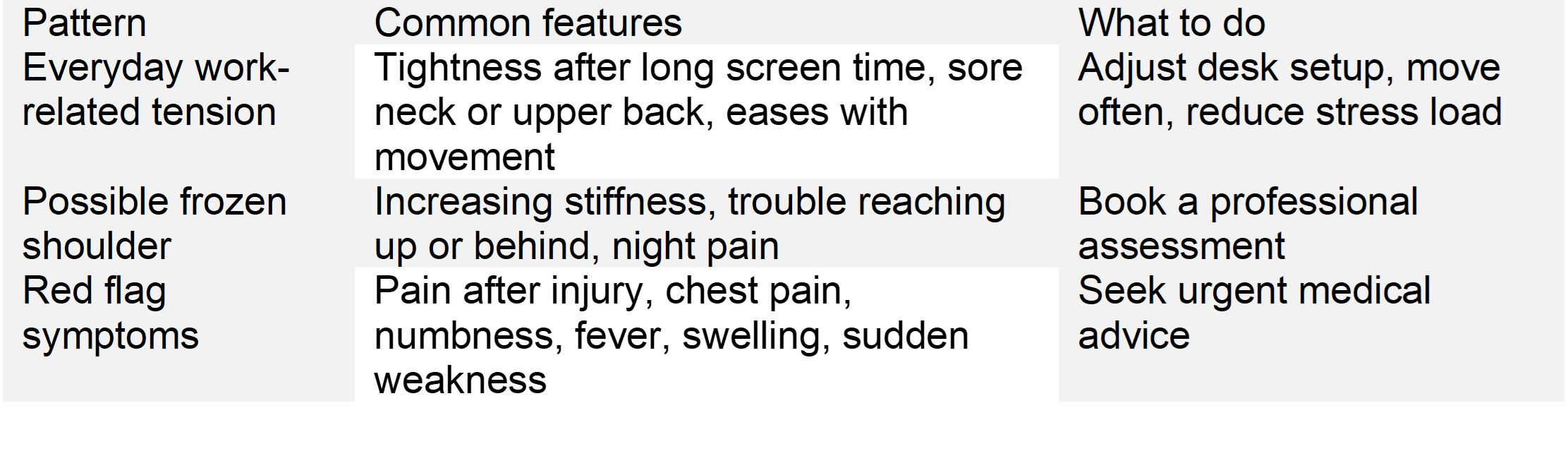
Tabl of Patterns
The key takeaway is simple: pain linked to posture often changes throughout the day. Frozen shoulder and red-flag symptoms usually feel more persistent or alarming.
Signs your pain is likely linked to posture, long hours and overload
Work-related shoulder pain often follows a pattern. It feels worse after a long session at the desk. It may ease once you walk, stretch or finish work. Many people notice stiffness at the end of the day, plus tightness that creeps into the neck or between the shoulder blades.
One-sided habits often leave one shoulder worse. For example, your mouse arm may ache more, or the side you use to hold the phone may feel tighter. That uneven pattern is a clue.
Pain like this can still be frustrating. Yet it often responds well to regular movement, better desk habits and calmer breathing.
Clues that frozen shoulder may be developing
Frozen shoulder usually builds in stages, rather than appearing after one hard day. At first, pain may come on gradually, often worse at night. Then stiffness becomes more obvious.
Simple tasks may start to feel awkward. Reaching overhead becomes harder. Fastening clothing behind your back can be difficult. Reaching into a back pocket or putting on a coat may also feel restricted.
If movement keeps shrinking over time, get advice. Frozen shoulder often needs patient, structured support.
Red flags you should not ignore
Some symptoms need medical help rather than self-management. Get advice if pain follows an injury, or if you have sudden weakness, numbness, swelling or fever.
Also seek help for chest pain, unexplained weight loss, or shoulder pain that doesn't improve over time. These signs are less common, but they matter.
Simple changes during the workday that can ease pain fast
Busy founders don't need a long wellness ritual in the middle of a packed day. Short breaks and body awareness usually help more than trying to sit perfectly for eight hours.
Small changes work because they lower the total load on the same muscles. That's often enough to reduce pain before it builds into a bigger problem.
Build short breaks into your day before pain forces you to stop
Set a simple rule: stand up every 30 to 45 minutes. Walk for one or two minutes. Roll the shoulders. Change position during calls. If needed, use calendar prompts until it becomes automatic.

Walking and rolling your shoulders to bring some flexibility in
These breaks don't need to be dramatic. The win comes from frequency. A brief reset every half hour usually beats waiting for one long break at lunch.
During calls, stand or pace if you can. After intense meetings, take 60 seconds before opening the next tab. That small gap can stop pain from stacking up.
Set up your desk so your body does less extra work
Your screen should sit near eye level, so you don't keep dropping your head. Your chair should support your back. Keep feet flat on the floor, or on a footrest if needed. Elbows should stay close to the body, with the keyboard and mouse within easy reach.

The correct posture - straight back and feet flat
Laptop-only working is a common trap. It pulls the screen too low and the keyboard too high for comfort. A laptop stand, plus a separate keyboard and mouse, is often a cheap fix with a big payoff.
You don't need an expensive office refit. Often, a few well-placed changes reduce extra strain straight away.
Try a quick reset when your shoulders creep upwards
Use this 30-second reset during tense moments. First, unclench your jaw. Then drop your shoulders away from your ears. Take one slow breath in through the nose, then breathe out longer than you breathed in. Gently tuck the chin. Finally, relax your hands.
That sequence works because it interrupts bracing. It tells the body that the threat is a deadline, not a tiger.
Repeat it before difficult calls, after a heavy email run, or when you catch yourself gripping the mouse.
Can exercises, posture straps and stress relief actually help?
Yes, but no single tool fixes shoulder pain on its own. Think of support as a mix: better movement, smarter setup, less stress load and stronger muscles. Each part helps a little; together, they help much more.
Dumbbell exercises that support better posture and stronger shoulders
Light, controlled exercises can help the muscles that support the upper back and shoulders. Rows, reverse flies, external rotations, and carries are good examples. The aim is not to smash a workout. It's to build steadier support around the shoulder girdle.
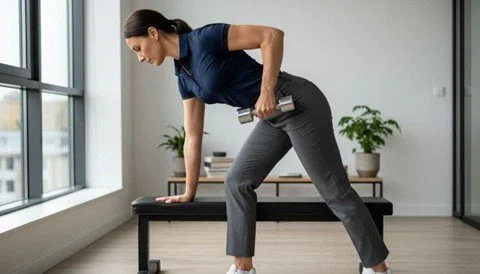
Dumbells work well - you provide the resistance
Start gently, and focus on form. If an exercise increases pain sharply, stop and get guidance. Done well, strength work can make posture easier to hold because the right muscles do their share.
Are posture straps worth trying
Posture straps can help some people notice when they slump. That short-term feedback may be useful, especially if you spend all day at a screen.
Still, they're not a long-term answer. Wearing a strap all day can create reliance, and it doesn't teach the body to move better. Use one briefly if it helps awareness, but don't let it replace movement, strength work and desk changes.
Sophrology, breathing and mindfulness for stress-related tension
Sophrology is a simple mix of breathing, body awareness and guided relaxation. For a founder with a full head and a tight neck, that can be practical rather than fluffy.
The value is awareness. You notice when your shoulders are braced, when you're holding your breath, or when your jaw is locked. Then you can change it. Even two minutes of slow breathing or a short guided relaxation can lower tension and improve how the shoulders feel.
How food, hydration and sleep affect pain and recovery
These basics matter more than people like to admit. If you're dehydrated, under-fuelled and sleeping poorly, muscle tension often lingers. Recovery slows down.
Regular meals, enough protein, fruit and veg, and oily fish or other anti-inflammatory foods can support general recovery. So can drinking enough water across the day. Sleep is the quiet partner here. Without it, pain often feels sharper and patience runs thinner.
Shoulder pain isn't a moral test. It's feedback. For founders carrying both mental and physical load, that message can be easy to miss until the body speaks loudly. Start with the simple things, improve posture gently, take short breaks, lower stress, and build some strength. If symptoms point to frozen shoulder or anything more serious, get help early, because pain responds best when you listen before it starts shouting.
